
Stealth
honduras mahogany, 16″ by 30″ by 2″ on oak base. 2013-2016. private collection
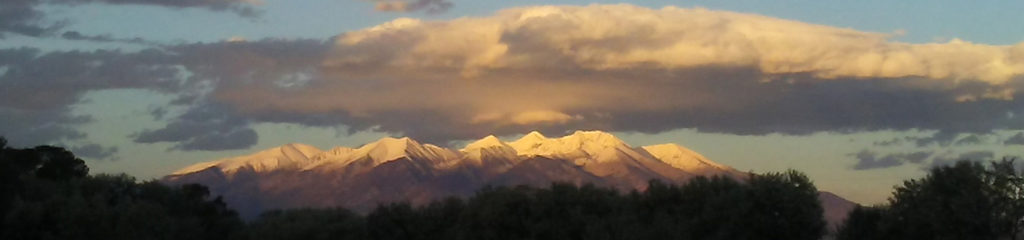
Stealth was carved during a period of transition when Henry and I tried to leave the San Luis Valley and then were boomeranged right back within a year. It is still puzzling to me why carving and painting predators sometimes comes to me, maybe because I admire their warrior stealth, silence, and focus.

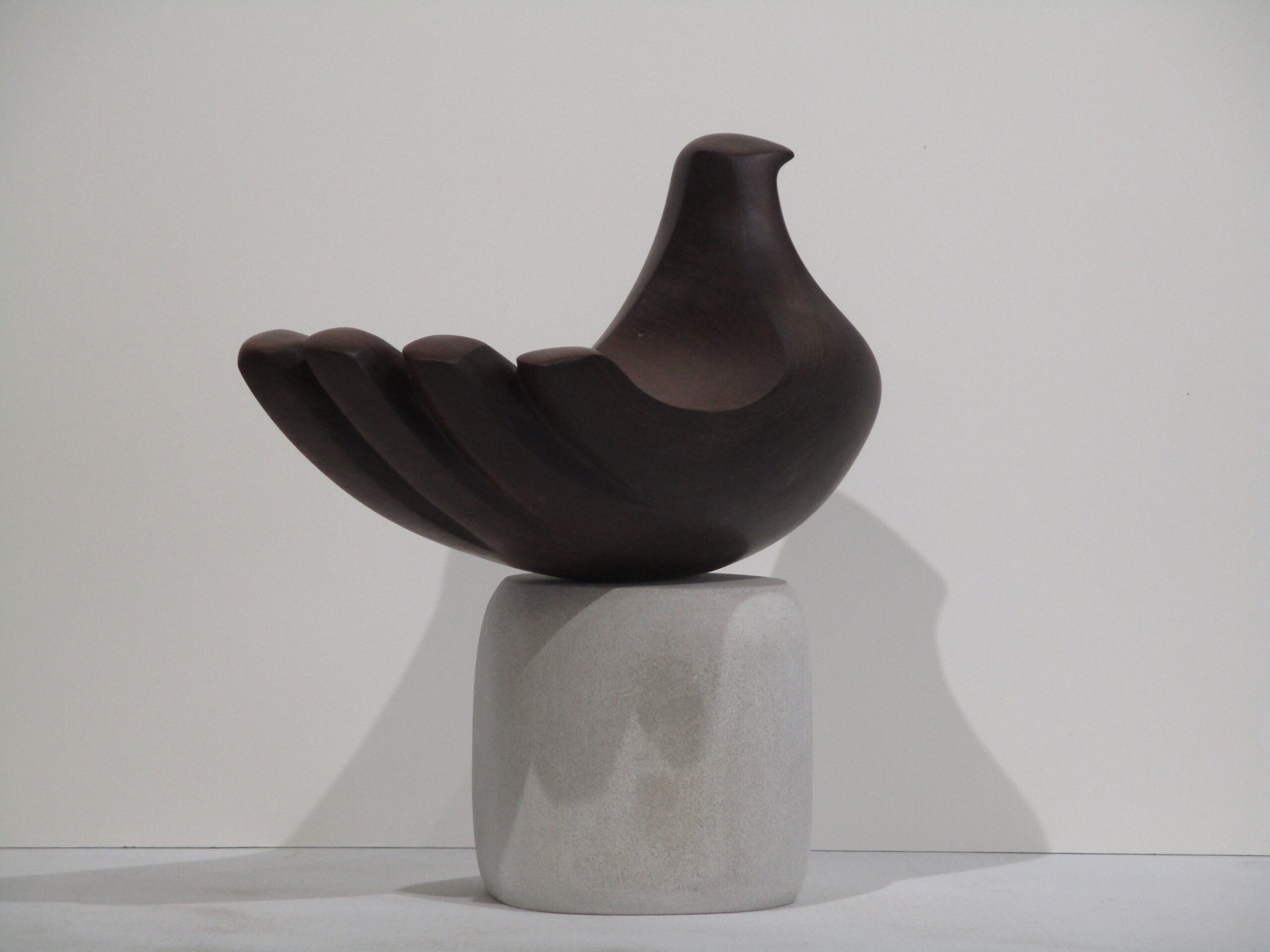
bird in the hand
padouk wood on limestone 12.5″ by 5″ by 11″ 2020-2021 sold!
Like the work of my mentor, Gordon Newell, this little form is down to the essence of sculpture: concavities and convexities. It is one of several pieces carved during the pandemic.
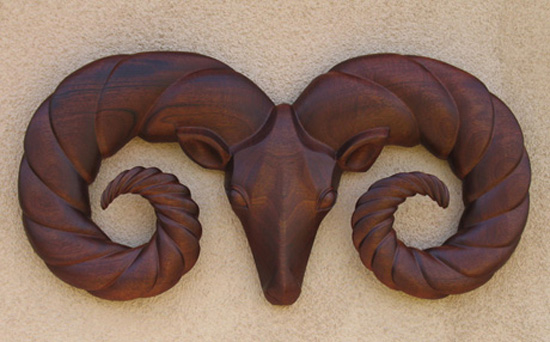
Big Horn
carved in honduras mahogany. 14″ by 28″ by 2″ private collection
spirals are not as easy to carve as one might imagine, especially when one goes in one direction and the other in the other.
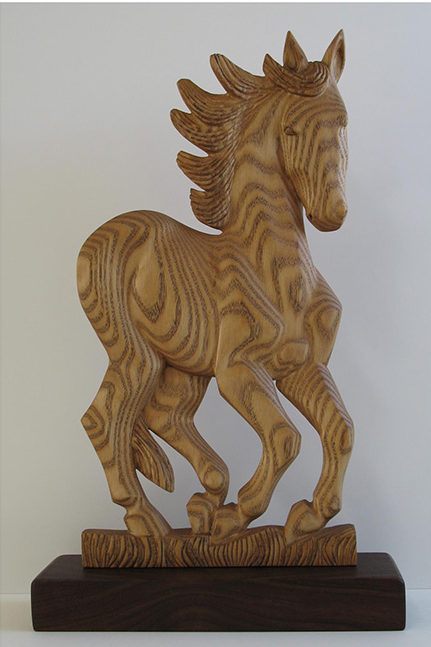
Galloping Horse
Ash on walnut base, 26 inches tall, 2006. Private collection.
The loud figure in the grain of ash wood helps create the illusion of depth when in reality the piece is less than an inch thick.
Compression
Marble, 10″ x 8″ x 6″, 2002. Private collection
Sculptures have to relate to the substance out of which which they are created. Any sculpture that comes from stone is going to have to relate to the density and compaction of stone, hence the idea of compression. Compression also expresses a mood, a sense of interior space in the mind, body, and spirit.

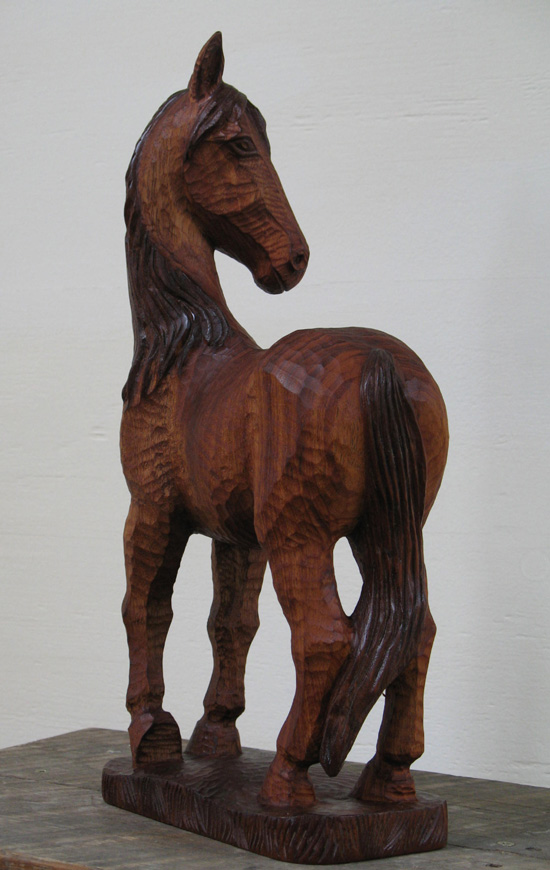
Pancho
Honduras mahogany. 15″ by 7″ by 4″. 2005-2009. Private collection
originally this little piece had a figure riding on it but in 2005 I was party to the death of an old horse on top of Ute mountain because I failed to follow my intuition. I felt I had sinned against my totem spirit animal, so I carved the figure away to leave just the horse.
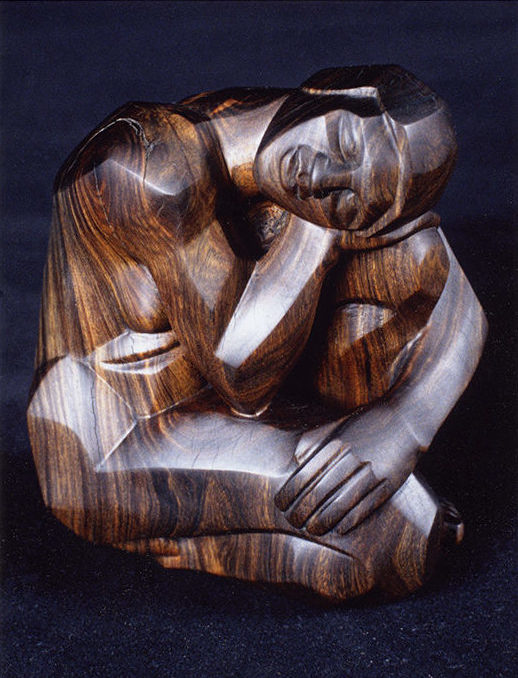
Compression
Lignum vitae, 6 inches tall, 1990. Private collection
Lignum vitae, which is Latin for living wood, is one of the densest woods in the world. It won’t float; it’s full of natural oils, and it was used by the Navy for ball bearings and chocks, and by sculptors for their carving mallets. Needless to say it’s very hard to carve and the chips fly off like missiles. Nevertheless it takes the most incredible satiny polish.
The wood version of this sculpture came before the marble version of 2002.
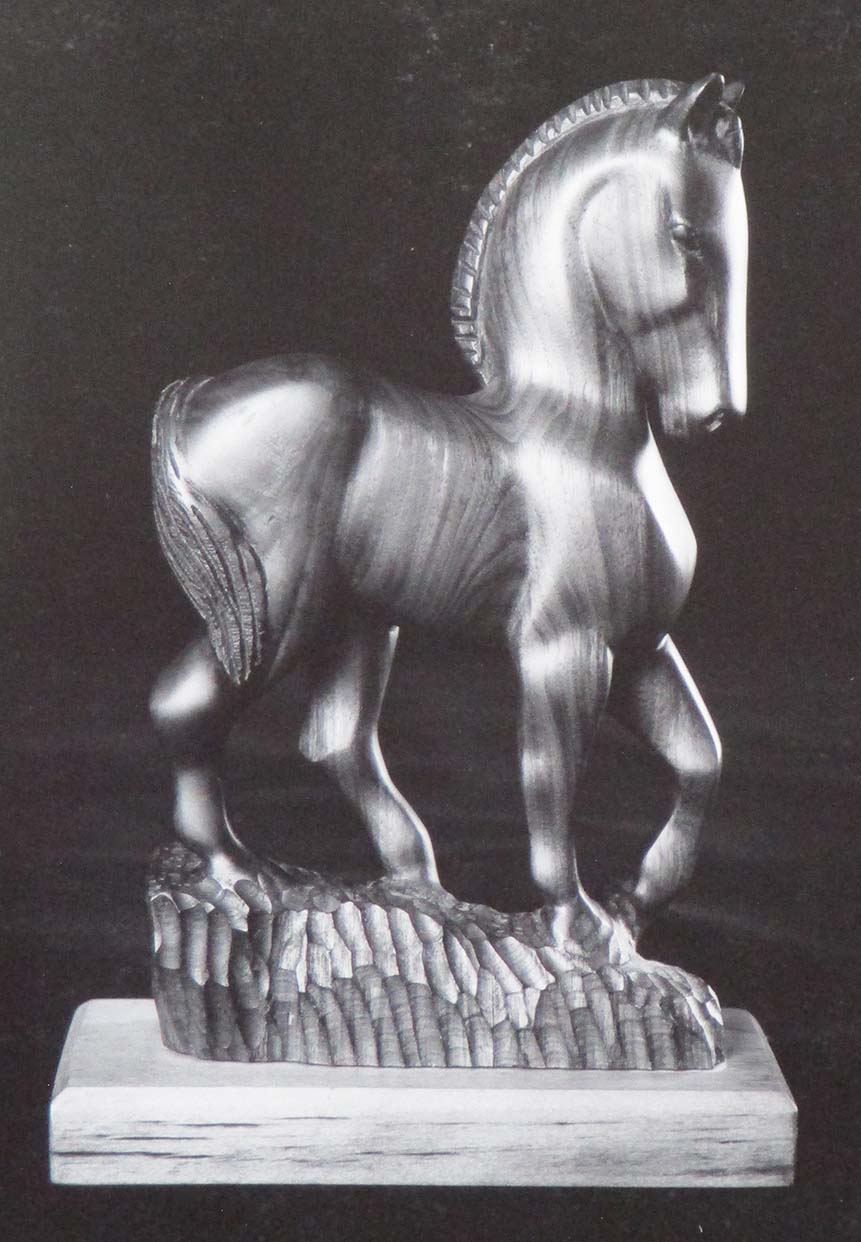
Trojan Horse
Black walnut on Maple base, 12 inches tall, 1986. private collection.
Black walnut has the perfect density to carve because it has a lot of structural integrity and it takes a beautiful polish. I enjoyed playing with varying textures in this piece and with trying to capture the feeling of collection in the horse
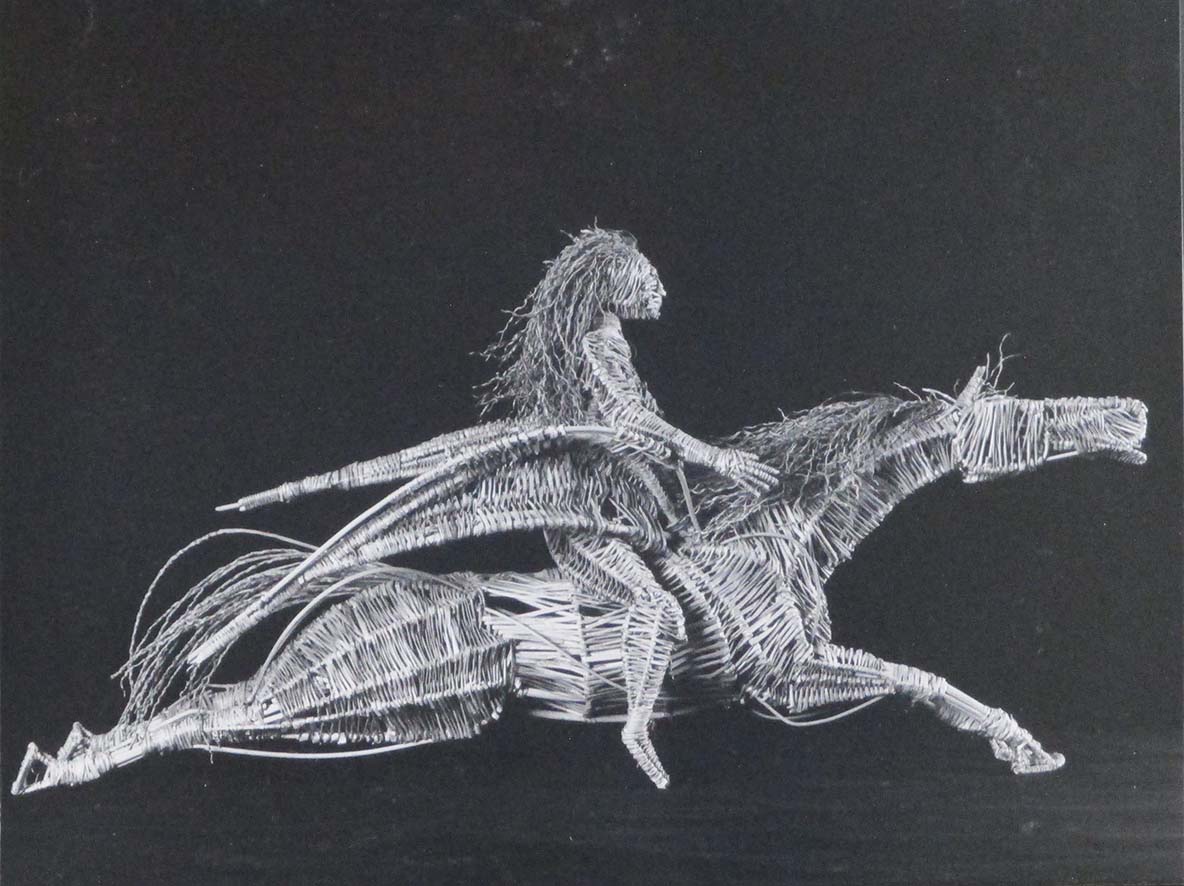
Pegasus and the Goddess
Seagrass and caning, 46 inches long, 1989. Private collection.
I was told the story of Pegasus many times when I was a child, but never with a naked goddess riding on Pegasus’s back, which seems befitting to such a magical horse, so I had to make the image myself. i made this piece so it can hang suspended.
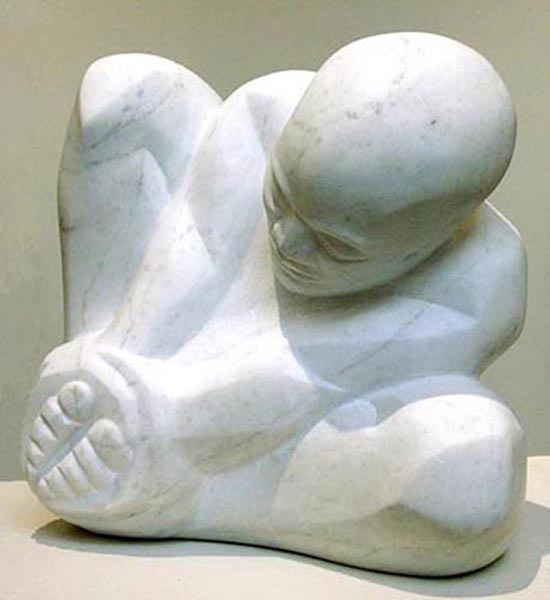
Roly Poly
Colorado marble. 10″ by 11″ by 8″, 2001. SOLD !!!
On our honeymoon, Henry and I stopped by Marble, Colorado to see if I could find a chunk of marble small enough for me to carry but not pinned down by the titans that had been flung off runaway trains from the quarry above. I doubt Henry knew how tenacious I could be when hunting stone, nor had he any idea that he might be pressed into service. I found a good chunk of marble at the bottom of a ravine and had to call him to push me up the hill while I clutched the marble to my belly.
Drumming Ecstasy
black walnut, 24″ by 16″ by 8″. 2001. Private collection
like Flute Abandon, this piece celebrates the joy of making music

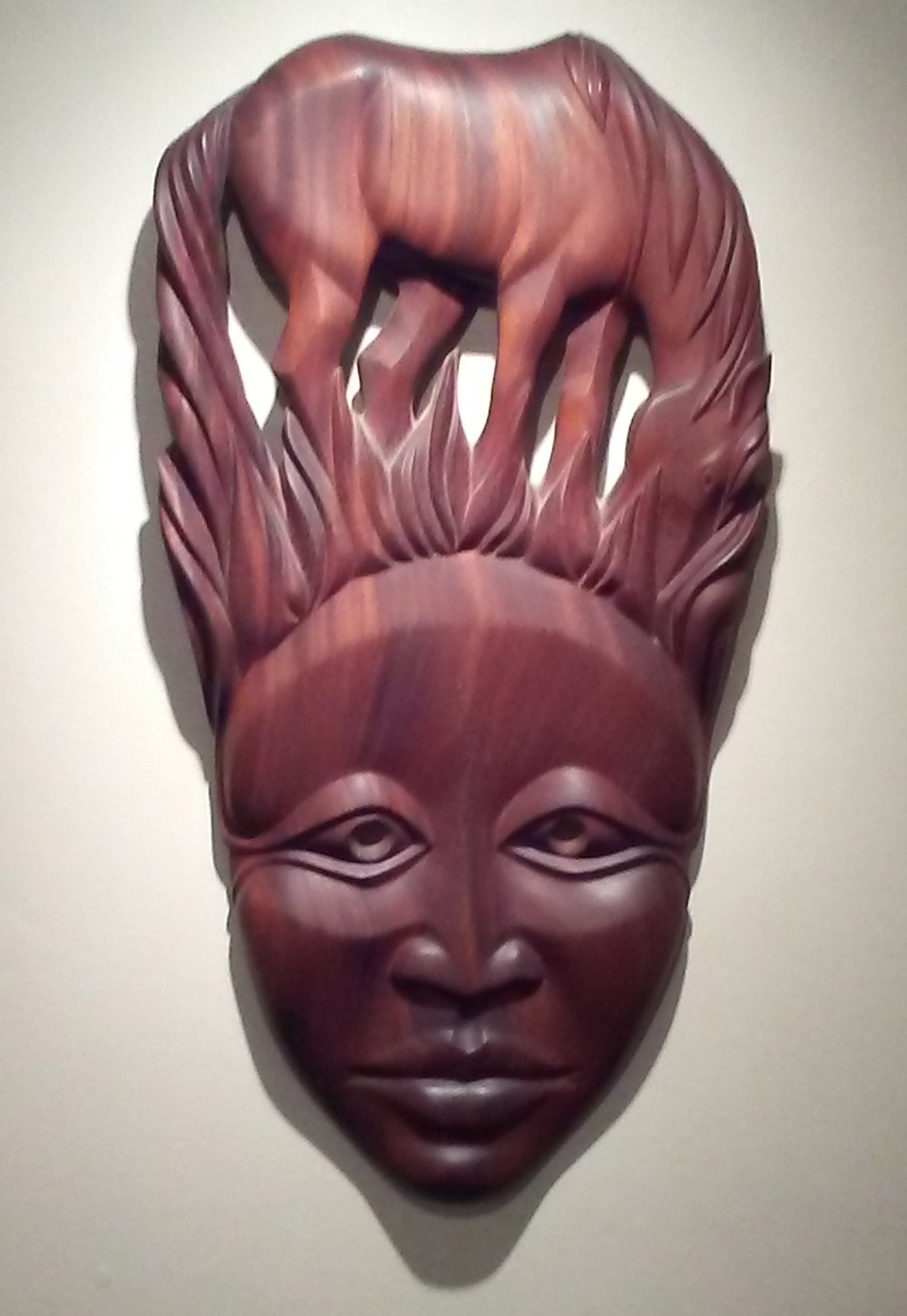
Mask with Grazing Horse
Honduras mahogany, 29 inches tall by 15 inches wide, 2000. Private collection.
In 1999, Henry and I took a trip to Benin in West Africa. That trip shook up my notion of art in the best way possible, and when we came back home our artwork exploded into new directions. Africa helped me break some rules I didn’t even know I was abiding by, such as the idea of a horse grazing on grass growing out of a human head